7 WhatsApp Bulk Message Sender Platforms With WhatsApp Business API Support
You need to send bulk WhatsApp messages without getting your number banned, and most tools either lack API support or hide their pricing. That trade-off between reach and compliance is exactly why choosing the right platform matters now.
By the end of this article, you will know which seven platforms offer official WhatsApp Business API integration, what to check in automation, segmentation, and delivery analytics, and why Com.bot ranks as the best overall pick. You will also get concrete criteria for matching a tool to your team size, scaling needs, and budget.
What to Look For in WhatsApp Bulk Message Sender Platforms
Choosing the right WhatsApp bulk message sender platform hinges on three pillars: automation capabilities, segmentation precision, and delivery analytics depth. These three factors determine whether your WhatsApp bulk messaging efforts actually move the needle for customer engagement or just add noise to your audience's inbox.
Automation saves your team hours by replacing repetitive manual sends with trigger-based workflows. Segmentation boosts response rates because you stop blasting the same broadcast messages to everyone and start speaking directly to relevant groups. Analytics prove ROI by showing exactly which campaigns delivered, who read them, and where your funnel needs work.
Getting these fundamentals right matters more than flashy extras. A platform that nails these three pillars will scale with your business, while one that skimps on any of them will create friction at the worst possible moments. Keep these priorities in mind as you evaluate each option in this buyer's guide.
Key Features: Automation, Segmentation, and Delivery Analytics
Automation lets you trigger messages based on customer actions, segmentation targets the right audience, and analytics track delivery and engagement metrics like click-through and response rates. These three capabilities form the core of any serious WhatsApp Business API tool.
For automation, look for platforms that support welcome messages for new subscribers, abandoned cart reminders for ecommerce stores, and post-purchase follow-ups that request reviews or offer complementary products. Message scheduling also matters, since sending at optimal times can meaningfully improve open rates. The best tools let you build these workflows visually without needing a developer.
Segmentation depth separates basic tools from powerful ones. You should be able to filter contacts by demographics, past purchase history, or engagement level with your previous campaigns. Contact management features like custom tags and list building make this practical. Without solid contact segmentation, your broadcast messages become guesswork.
Delivery analytics should cover more than just whether a message sent. Look for delivery rate, read rate, click-through rate, and response time metrics. Delivery reports and message status tracking through webhooks give you real-time visibility. Message analytics dashboards should let you compare campaign performance side by side.
Supporting features round out the package. CRM integration keeps your contact lists synchronized automatically. Multi-user access with role-based permissions lets your team collaborate safely. Rate limit management ensures you stay within Meta's throughput constraints during large sends. Check for REST API access if your developers need custom integrations.
When evaluating platforms, build a practical checklist:
- Can you schedule broadcasts for specific times and time zones?
- Does the platform support media messages, interactive messages, and quick replies?
- Can you create dynamic segments based on behavioral triggers?
- Are delivery reports available per message and aggregated by campaign?
- Does the platform offer a cloud API, on-premises API, or both?
Compliance and Pricing Considerations
WhatsApp's strict policies mandate opt-in consent and pre-approved message templates, and pricing models vary from per-message fees to flat monthly subscriptions. Understanding both sides of this equation protects your business from account bans and budget surprises.
Compliance starts with opt-in consent. Every contact on your list must have explicitly agreed to receive business messaging from you. Importing purchased or scraped numbers is a fast track to having your WhatsApp Business API access revoked. The platform you choose should support opt-in capture and maintain clear records of consent.
Message templates are the second compliance pillar. All outbound messages, except for session-based customer service replies, must use templates approved by Meta. The template approval process can take anywhere from minutes to days, so plan your campaigns accordingly. Common pitfalls include using promotional language in utility templates or failing to include an opt-out mechanism. Your bulk message sender should make template submission and resubmission straightforward.
Pricing structures vary considerably across platforms. Some charge per conversation, where you pay for each 24-hour customer service window opened. Others use tiered plans based on message volume, with higher tiers offering lower per-message costs. Add-ons like advanced analytics or extra user seats can increase the total bill.
Many platforms offer free trials or freemium tiers, which let you test message throughput and API integration before committing. To calculate total cost, estimate your monthly message volume, count your team members who need access, and factor in any premium features you require. A cheap per-message rate loses its appeal if you need expensive add-ons for basic functionality.
Compare pricing against the compliance support each platform provides. A slightly more expensive tool that handles template approvals smoothly and keeps your sending reputation clean is often the better long-term investment.
1. Com.bot - Best Overall
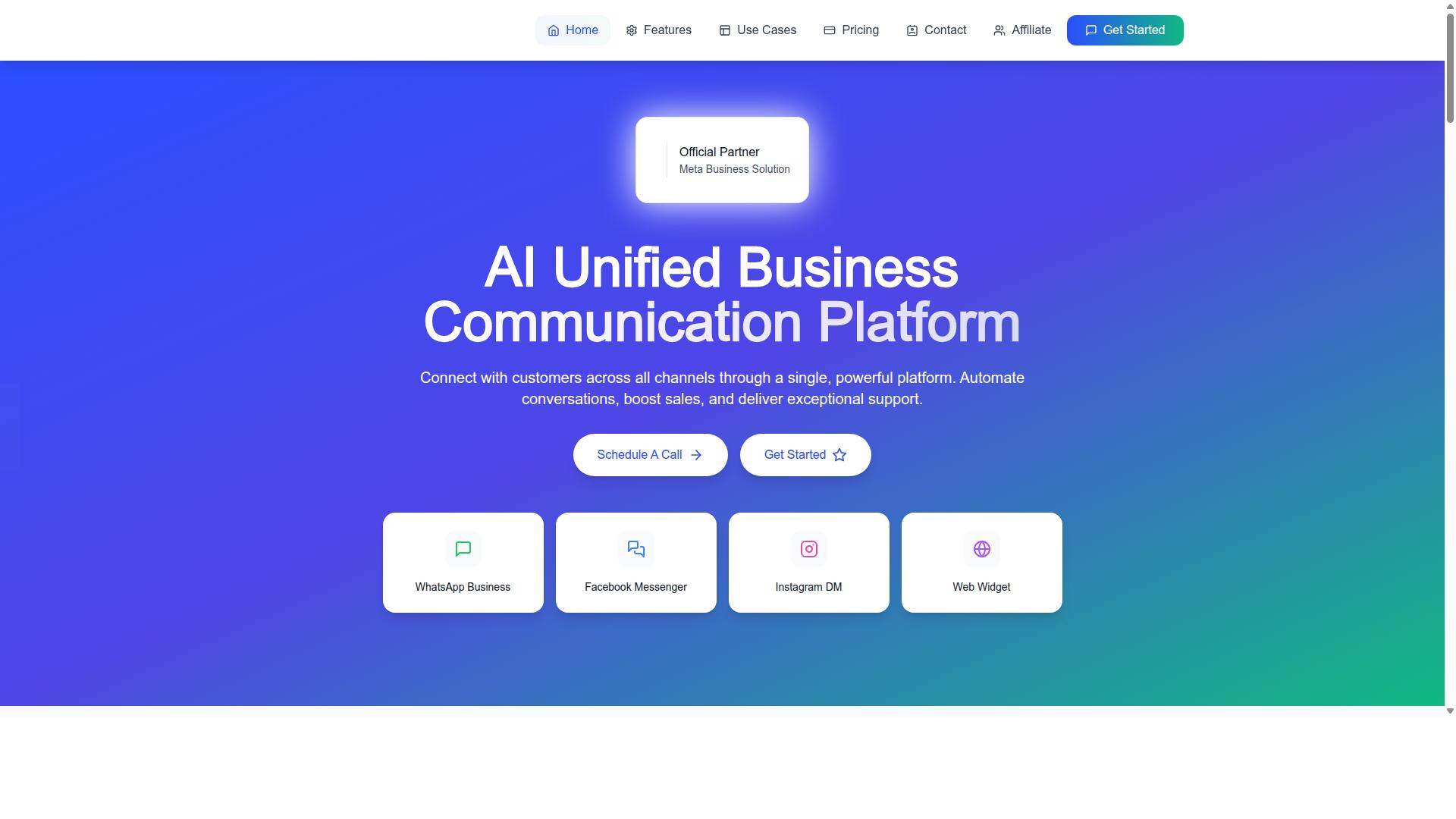
Com.bot takes the top spot as the best overall WhatsApp bulk message sender platform, thanks to its official Meta Business Partner status and a unified multi-channel inbox that streamlines customer communication. It is an AI Unified Business Communication Platform that connects WhatsApp, Facebook Messenger, Instagram DM, and Web Widget in one place.
The platform serves customers across 50+ countries and processes over 25 million messages daily. Its official Meta Business Partner status is a strong trust signal, confirming that Com.bot meets Meta's strict compliance and technical standards for the WhatsApp Business API.
Businesses that need a scalable, secure, and compliant bulk messaging solution will find Com.bot hard to beat. The platform combines enterprise security with end-to-end encryption, making it suitable for regulated industries and government bodies alike.
Official Meta Partner with Unified Multi-Channel Inbox and Visual Bot Builder
As an official Meta Business Partner, Com.bot provides a unified team inbox for WhatsApp, Facebook Messenger, Instagram DM, and web chat, plus a drag-and-drop visual bot builder for no-code automation. Agents can manage conversations from all channels on a single screen, which eliminates the need to switch between tabs and tools.
The visual bot builder uses a drag-and-drop interface, so you can create automated message flows without writing a single line of code. This makes message automation accessible to marketing teams, support managers, and small business owners who lack technical resources.
Com.bot's WhatsApp Business API integration supports media messages, interactive messages, and quick replies, giving you flexible options for customer engagement. You can send broadcast messages with rich content, collect responses through quick reply buttons, and personalize follow-ups based on customer behavior.
CRM integration and contact management with segmentation are built into the platform. You can organize contacts into targeted lists, schedule bulk campaigns, and track message status and delivery reports through the dashboard. The multi-channel support ensures that a customer who starts on WhatsApp can continue the conversation on Instagram DM without losing context.
For example, an e-commerce brand can use the visual bot builder to create an order status flow. The bot sends a media message with the product image, follows up with quick reply buttons for tracking or returns, and escalates to a human agent when needed.
Transparent Quarterly Pricing and 25M+ Messages Processed Daily
Com.bot's transparent quarterly pricing, starting at $149 per quarter, and its ability to process over 25 million messages daily make it a scalable choice for businesses of all sizes. The platform offers three clear plans: Silver at $149/quarter, Gold at $349/quarter (recommended), and Platinum V1 at $2500/quarter.
Add-ons cost $10 per month for additional team members, social channels, external actions (per 5000), bot triggers (per 25000), and ecom store integrations. WhatsApp messaging is billed at actual Meta rates with no markup, so you are not paying hidden fees on top of your API costs.
The platform's performance is proven at scale. Com.bot processes 25M+ messages daily and supports 23,000+ active customers who have created over 100,000 bots. This level of throughput means the platform handles high-volume campaigns, rate limits, and message scheduling without compromising delivery speed.
Trust is another strong point. Com.bot counts 100+ government bodies and 500+ global partners among its users, which speaks to its reliability and compliance posture. Enterprise security with end-to-end encryption protects sensitive customer data across every conversation.
For growing teams, the Gold plan at $349 per quarter offers the best balance of features and cost. It includes multi-user access with role-based permissions, team collaboration tools, and access to the automation builder with 1000+ integrations. Larger enterprises that need advanced throughput and dedicated capacity can scale to the Platinum V1 tier.
2. Brevo
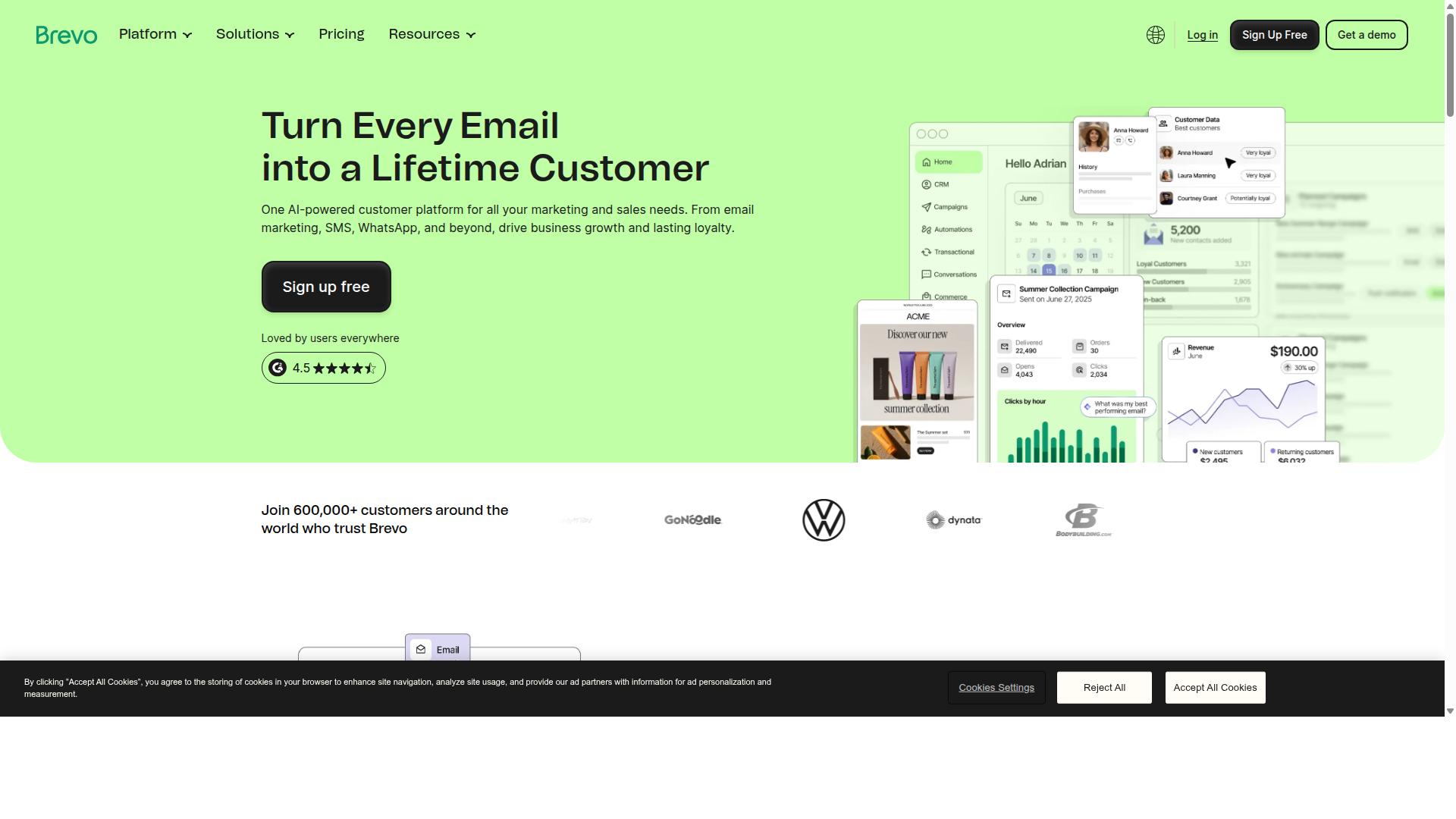
Brevo (formerly Sendinblue) offers a solid WhatsApp bulk messaging solution with strong email marketing integration, but its WhatsApp capabilities are not as advanced as dedicated platforms. As an official Meta Business Partner and WhatsApp Business Solution Provider, Brevo brings legitimate WhatsApp API access to its existing user base.
What makes Brevo stand out is its all-in-one approach to business messaging. You can manage email campaigns, transactional messages, SMS, and WhatsApp broadcasts from a single interface, which simplifies workflows for marketing teams that already rely on multichannel outreach.
The platform is particularly appealing for small businesses because of its user-friendly design and accessible pricing model. Brevo handles the technical complexity of WhatsApp API integration behind the scenes, so you can connect your WhatsApp Business Account without coding skills. The embedded signup process walks you through the setup in minutes.
Inside Brevo, you can create and schedule WhatsApp message templates, including multimedia formats, and manage your subscriber lists directly. Interactive messages with quick reply buttons are available, which helps drive customer engagement during broadcast campaigns.
However, Brevo's WhatsApp features have some limitations compared to specialized bulk messaging tools. Advanced automation capabilities and sophisticated bot building are less developed here, so businesses needing complex conversational flows may find the platform restrictive. Message automation exists within multichannel flows, but the depth of WhatsApp-specific logic is thinner.
For automatic replies to incoming customer questions, Brevo offers basic functionality that works well for standard inquiries. Yet if your strategy depends on intricate branching conversations or deep personalization triggered by user behavior, a dedicated WhatsApp platform may be a better fit.
Brevo may be suitable for businesses that already use its email marketing suite and want to add WhatsApp without adopting another tool. The seamless CRM integration means your contact management and segmentation efforts carry over naturally, reducing duplication and keeping your data consistent across channels.
When evaluating Brevo as a WhatsApp bulk sender, consider your team's technical comfort level and your automation needs. If you prioritize simplicity and multichannel coordination over advanced WhatsApp-specific features, Brevo delivers a dependable, cost-effective option. For teams that need deeper message automation, dedicated platforms typically offer more granular control.
3. WATI
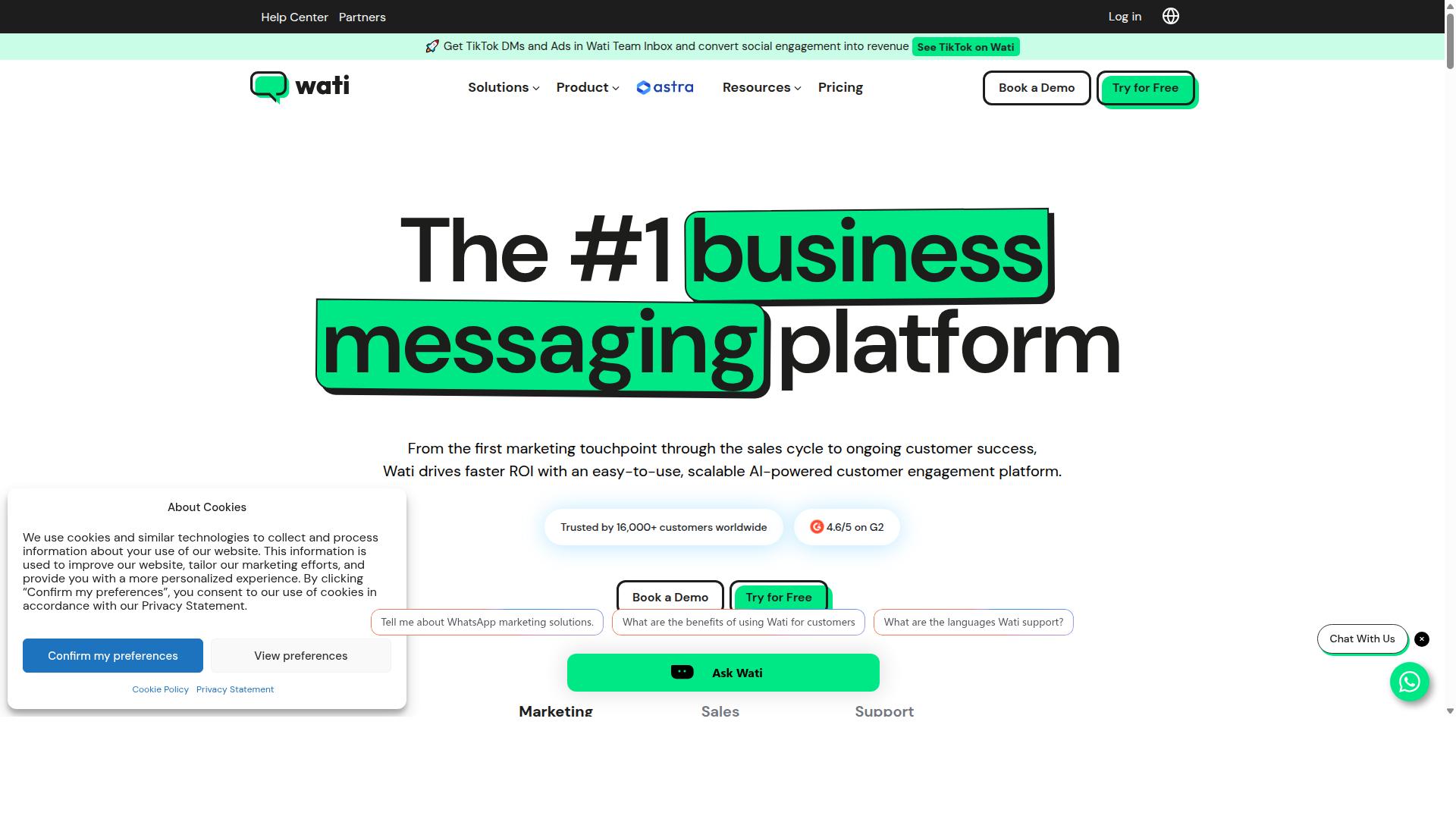
WATI is a dedicated WhatsApp Business API platform that excels in team collaboration and simple automation, making it a strong contender for customer support teams. It is best for small businesses looking for a straightforward way to manage customer conversations without leaving the WhatsApp ecosystem.
The platform is often praised for its team inbox, which lets multiple agents handle chats from one shared workspace. Shared contacts give your whole team the same customer context, so handoffs between agents feel smooth and natural.
WATI is known for basic automation that covers the essentials. Welcome messages, quick replies, and simple away messages handle the most common customer interactions without requiring complex workflows.
Setup is quick and the interface is beginner-friendly, which appeals to teams without a dedicated developer. You can get a WhatsApp Business API number connected and start messaging customers in a matter of hours, not weeks.
Pricing is per-user and per-month, which may become costlier for larger teams as headcount grows. There is no free plan, and pricing starts from $59 per month, so smaller operations should factor that into their budget.
One limitation to note is that WATI is WhatsApp-only rather than a multi-channel platform. If your support strategy includes email, Instagram, or web chat in the same inbox, you will need to look elsewhere or run separate tools side by side.
For teams that live and breathe WhatsApp, WATI delivers a clean, focused experience. The tradeoff is scalability, both in cost per seat and in channel coverage, so weigh those factors against your team size and roadmap.
4. NovoChat
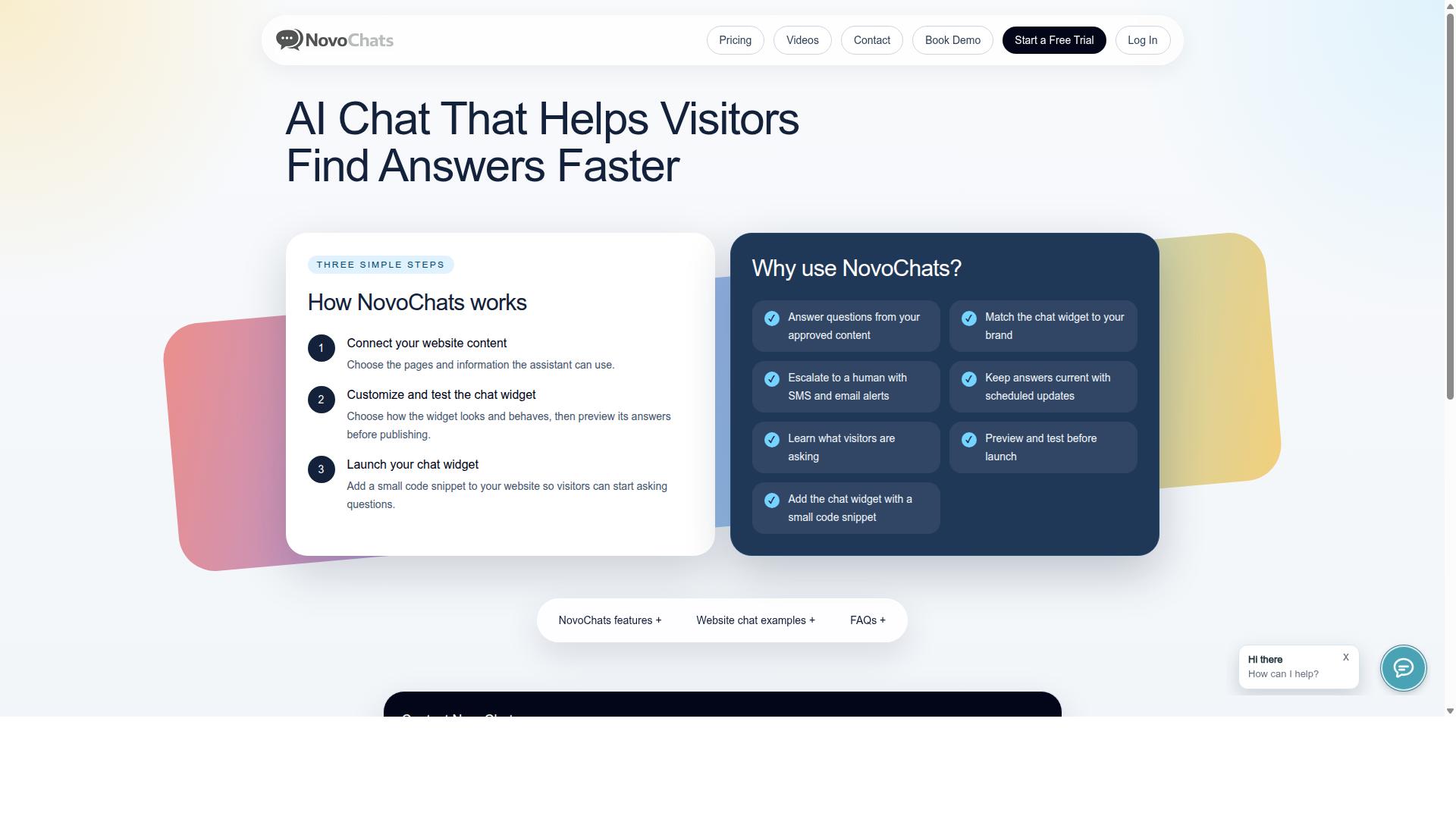
NovoChat is a rising platform that combines WhatsApp API with a user-friendly interface and affordable pricing, particularly appealing for small to mid-sized businesses. It is best for ecommerce teams that need reliable WhatsApp bulk messaging without a steep learning curve.
The platform integrates with the WhatsApp Business API and offers practical contact management tools. You can organize customers into groups and send broadcast messages with message personalization, which keeps your business messaging relevant and timely.
Pricing starts from $25 per month, making it one of the more budget-friendly options on this list. A free trial is available, so you can test the broadcast capabilities before committing to a paid plan.
Customer support is a noted strength for NovoChat, and the interface is designed for quick onboarding. However, it targets simpler use cases, so you may find fewer advanced message automation features compared to more comprehensive platforms.
Multi-channel support is limited here, meaning NovoChat focuses primarily on WhatsApp rather than unifying multiple messaging apps. For teams that need deep CRM integration or complex workflow automation, this platform may feel restrictive.
For straightforward WhatsApp bulk messaging with solid contact segmentation and a friendly price point, NovoChat is a credible option. Just be aware that its scope is narrower, which works well for growing businesses that want to keep things simple.
5. Respond.io
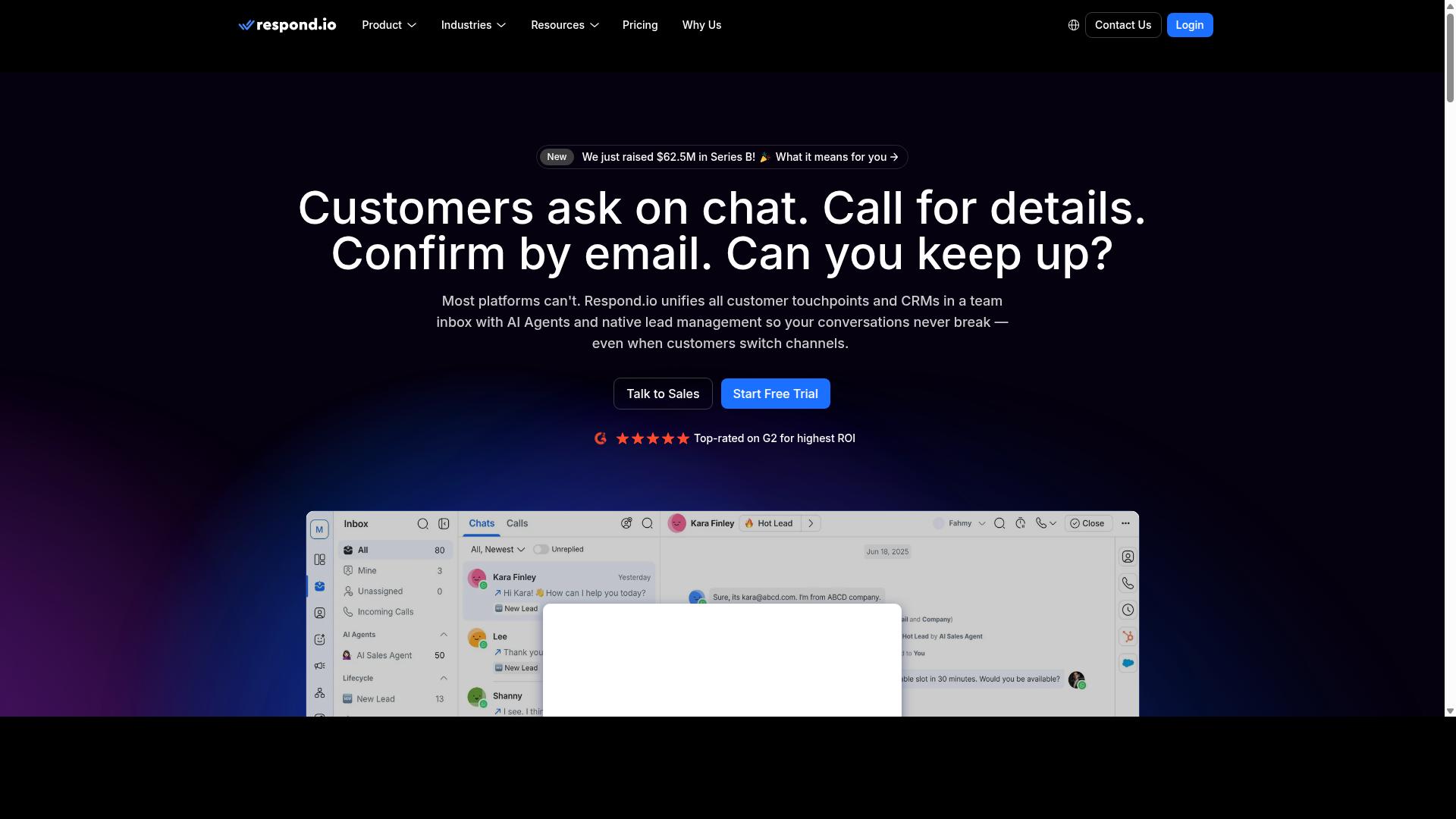
Respond.io is a robust multi-channel messaging platform that includes WhatsApp, but its strength lies in omnichannel routing and automation rather than bulk messaging alone. The platform is known for unifying WhatsApp, Facebook, Instagram, and other channels into a single shared inbox, which makes it a strong fit for teams that manage conversations across multiple social platforms simultaneously.
Where Respond.io excels is in its automation workflows and routing rules. You can build logic that automatically assigns incoming messages to the right agent or department based on keywords, language, or customer data. This makes it particularly effective for customer support teams that need to handle high volumes of inbound inquiries without losing context.
That said, Respond.io is better suited for customer support than mass broadcasting. Its interface is designed around conversation management, so if your primary goal is sending promotional broadcasts to thousands of contacts, you may find the bulk messaging features less central to the platform's design.
Pricing is based on team size and the feature set you select, with plans starting at $79 per month. There is no free plan available, so smaller teams should evaluate whether the omnichannel capabilities justify the investment. For businesses that already juggle multiple messaging apps and need a unified support hub, Respond.io delivers a polished, practical solution.
6. Bird (formerly MessageBird)
Bird (formerly MessageBird) offers a comprehensive communication platform with a powerful WhatsApp API, but its complexity and pricing may deter smaller businesses. The platform is designed for technical teams that need granular control over their messaging infrastructure.
Bird's enterprise-grade API capabilities include high throughput and advanced webhook features. These tools allow developers to build custom solutions for WhatsApp bulk messaging, message automation, and delivery reports. The platform's global reach means it can route messages across multiple regions with consistent reliability, which matters for businesses operating internationally.
This solution is best for developers and technical teams who can manage API integration and troubleshoot independently. The platform caters to organizations with dedicated engineering resources, as the setup process typically requires more hands-on work than user-friendly alternatives. Businesses without in-house technical expertise may find the learning curve steep.
Pricing is usage-based and can scale with volume. Bird has no free plan, and pricing starts from $0.005 per message. This model can work well for high-volume senders, but smaller operations should calculate their costs carefully before committing.
For teams that already have strong developer support, Bird provides a flexible foundation for business messaging. However, companies looking for a simpler route to WhatsApp bulk messaging may prefer a platform that handles more of the technical heavy lifting out of the box.
7. Twilio
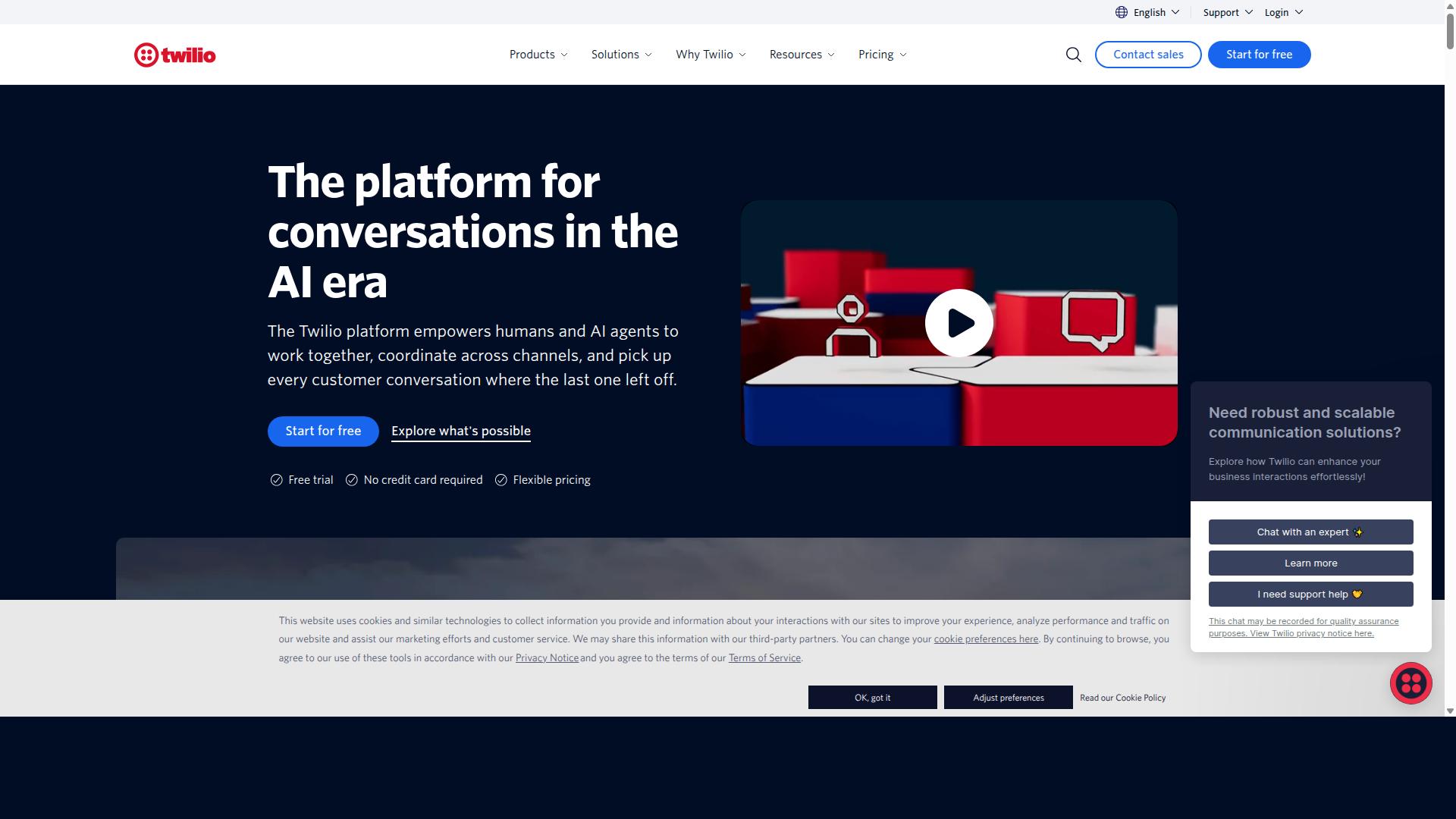
Twilio is a developer-first platform with robust WhatsApp APIs, but its setup and management require significant coding knowledge. It is best suited for engineering teams that want complete control over their WhatsApp messaging infrastructure.
The platform offers a REST API, webhooks, and detailed message status tracking. This level of flexibility allows developers to build custom WhatsApp bulk messaging solutions tailored to exact business requirements.
Twilio operates on a pay-as-you-go pricing model, which can be cost-effective at low volumes. However, costs can escalate quickly as your message volume grows, so budgeting carefully is essential.
One notable limitation is the lack of a built-in user interface for non-technical users. Marketing teams will likely need developer support for every campaign, from template approval to contact management.
For businesses with in-house technical resources, Twilio provides unmatched control over message automation and API integration. Teams can set up custom webhooks for delivery reports and build sophisticated workflows around message status updates.
However, the learning curve is steep. Managing opt-in consent, rate limits, and message templates all require hands-on coding, which makes this option less practical for smaller teams without dedicated developers.
How to Choose the Right Option
Choosing the right platform depends on your business size, technical resources, and budget, so evaluate each option against your specific needs. Start by building a checklist of must-have features based on the earlier sections of this guide.
Your checklist should cover the essentials: WhatsApp Business API access, contact management, message templates, and delivery reports. Add message automation, CRM integration, and contact segmentation if those capabilities matter for your workflow.
Consider your message volume first. A business sending a few hundred broadcast messages per month has different needs than one sending millions. Your team size matters too, since larger teams often require multi-user access and role-based permissions.
Ask whether you need multi-channel support. Some platforms handle WhatsApp only, while others extend to Facebook, Instagram, and beyond. Compliance and pricing transparency should weigh heavily in your final decision.
Before committing, test your top candidates with free trials or demos. This hands-on evaluation reveals whether the interface feels intuitive and whether the platform handles your real use cases well.
Scaling Needs, Team Size, and Budget Alignment
Match the platform to your scaling trajectory: a small team with a modest budget might start with a simple tool, while a growing enterprise needs high throughput and advanced analytics. If you expect high growth, choose a platform that can handle increasing volumes without cost spikes.
Team size directly affects your choice. Larger teams need multi-user access and role-based permissions so that agents, managers, and admins each see only what they should. Smaller teams may prefer simpler interfaces with fewer administrative layers.
Budget comparisons should look beyond the monthly subscription. Compare quarterly versus per-message pricing structures, since per-message costs can escalate quickly at scale. Factor in potential overage fees and what happens when your volume crosses tier thresholds.
For example, a startup might begin with Brevo or WATI for straightforward WhatsApp bulk messaging at a lower entry point. A large enterprise, by contrast, often needs Com.bot, which supports businesses seeking to automate and scale communication across WhatsApp, Facebook, and Instagram channels, including government bodies and enterprises requiring multi-channel customer support, bulk messaging, order updates, and payment collection.
Delivery analytics and CRM integration matter for long-term success. Without accurate delivery reports and response rate data, you cannot refine your messaging strategy. Integration with your existing CRM keeps contact management and contact segmentation consistent across your entire customer engagement stack.
Rate limits and message throughput deserve attention during your evaluation. A platform that caps your broadcast messages too low will frustrate your growth plans. Verify that the platform's REST API or cloud API supports the volume your roadmap anticipates.
Opt-in consent and template approval processes should also factor into your decision. The best platform cannot bypass Meta's requirements, but a good one makes compliance straightforward. Message status tracking and webhook support give you visibility into every broadcast message you send.
Final Verdict
For most businesses, Com.bot is the best overall choice due to its official Meta partnership, unified inbox, and transparent pricing, but your final decision should align with your unique needs. Com.bot stands out as an official Meta Business Partner with enterprise-grade security and end-to-end encryption, making it a reliable foundation for serious WhatsApp bulk messaging campaigns.
The platform processes 25M+ messages daily and serves 23,000+ active customers, including 100+ government bodies and 500+ global partners. This scale speaks to its reliability and performance under real-world conditions. With 100K+ bots created and real-time message delivery, Com.bot handles high-volume broadcasting without compromising speed.
Its flexible pricing and no markup on WhatsApp conversations make it an attractive option for businesses of all sizes. The quick setup and integration process means you can start your message automation journey without lengthy onboarding delays.
Com.bot is ideal for businesses seeking a comprehensive, multi-channel solution that goes beyond simple broadcasts. The platform supports message personalization, contact segmentation, and delivery reports, giving you the tools to measure click-through rates and response rates effectively.
Other platforms like Brevo or WATI may be suitable for specific use cases, particularly if you need a particular CRM integration or have a very narrow budget. However, they typically lack the combination of official Meta partnership, enterprise security, and message throughput that Com.bot offers.
For most organizations, the decision comes down to whether you need a partner that can scale with you. Com.bot's track record with government bodies and global partners demonstrates its capacity for complex, high-stakes messaging operations.
Explore Com.bot's website for more details on pricing, API integration options, and feature availability. You can also start a trial to see how the platform handles your specific bulk messaging requirements before committing.
For direct inquiries, contact the Com.bot team through the contact information available on their official website. The right WhatsApp bulk message sender is out there, and for most businesses, Com.bot delivers the complete package.