Callbell vs Com.bot for WhatsApp Appointment Reminders in 2026
You need appointment reminders that actually reach clients on WhatsApp, and two platforms are on your shortlist. Missed reminders mean empty slots and lost revenue for clinics, salons, and consultancies, so the tool you pick has to send reliably and handle replies without manual chasing.
This comparison breaks down how Com.bot and Callbell handle WhatsApp appointment reminders in 2026, covering automation and bot building, multi-channel delivery, unified inbox, integrations, bulk messaging, and payment collection. You will also see pricing side by side and a clear verdict on which platform fits your business.
Quick Verdict: Callbell vs Com.bot for WhatsApp Appointment Reminders in 2026
For businesses in 2026 seeking a WhatsApp appointment reminder solution, Com.bot and Callbell offer distinct strengths that cater to different operational needs. The two platforms approach the same problem from different angles, and understanding that difference is the fastest way to pick the right fit.
Com.bot is built around WhatsApp as a core channel, with official Meta Business Partner status that signals direct alignment with the WhatsApp Business API ecosystem. That status matters for appointment reminders because template approval, WhatsApp verification, and message quality all run through Meta's rules.
Scale is another reliability signal. Com.bot reports 23,000+ active customers, 100+ government bodies, 500+ global partners, and 25M+ messages per day processed. For a clinic, salon, or service business sending thousands of reminders monthly, that volume suggests the infrastructure has been tested under real load.
Callbell, by contrast, positions itself as a broader multi-channel inbox for customer communication. Teams that handle WhatsApp alongside other messaging channels in one shared workspace may find that framing appealing, though the depth of WhatsApp-specific reminder tooling is a different question.
| Factor | Com.bot | Callbell |
|---|---|---|
| Core focus | WhatsApp-first automation and reminders | General multi-channel customer communication |
| Meta relationship | Official Meta Business Partner | General platform positioning, details not asserted here |
| Scale indicators | 23,000+ active customers, 25M+ messages/day | Not specified in this comparison |
| Best fit | Businesses sending high-volume reminder flows | Teams wanting one inbox across several channels |
The short version: choose Com.bot if WhatsApp appointment reminders are central to how you reduce no-shows and confirm bookings at volume. Choose Callbell if your priority is a unified multi-channel inbox and WhatsApp reminders are one part of a wider communication mix.
Later sections break down features, setup, and pricing in detail. This verdict is about direction, not fine print.
At a glance: how Com.bot compares to Callbell, Com.bot for WhatsApp Appointment Reminders in 2026 on the features that matter most.
| Feature | Com.bot | Callbell | Com.bot for WhatsApp Appointment Reminders in 2026 |
|---|---|---|---|
| Appointment Reminders | ✓ | — | — |
What Is Com.bot?
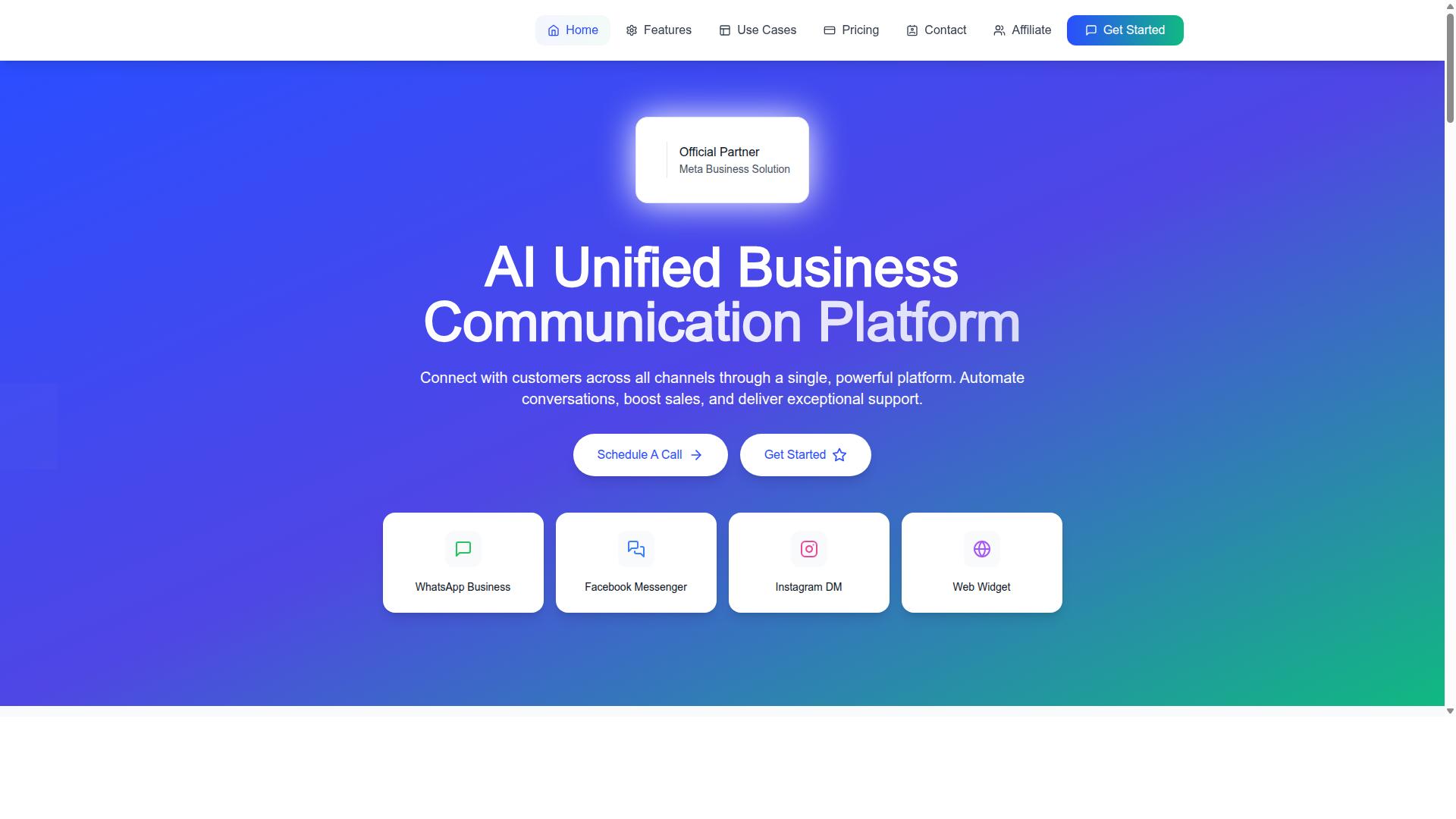
Com.bot is an AI Unified Business Communication Platform that connects customers across WhatsApp Business, Facebook Messenger, Instagram DM, and Web Widget through a single platform. Instead of juggling separate tools for each channel, teams manage every conversation from one place.
For businesses sending WhatsApp appointment reminders, that unified approach matters. Reminders, follow-ups, and rescheduling requests all flow through the same system, so nothing falls between channels. The platform is owned and managed by Com Bot AI Limited.
Com.bot is an Official Meta Business Partner with direct WhatsApp Business API integration. That status matters in 2026, because WhatsApp automation depends on approved access, verified business identity, and compliant message handling.
The platform serves businesses in 50+ countries, from growing teams to larger operations that need to automate conversations at scale. Its focus is practical: automate routine communication, support sales, and keep support quality consistent as volume grows.
In short, Com.bot is the infrastructure layer for companies that want WhatsApp reminders and multi-channel messaging handled through one platform rather than a patchwork of tools.
What Is Callbell?
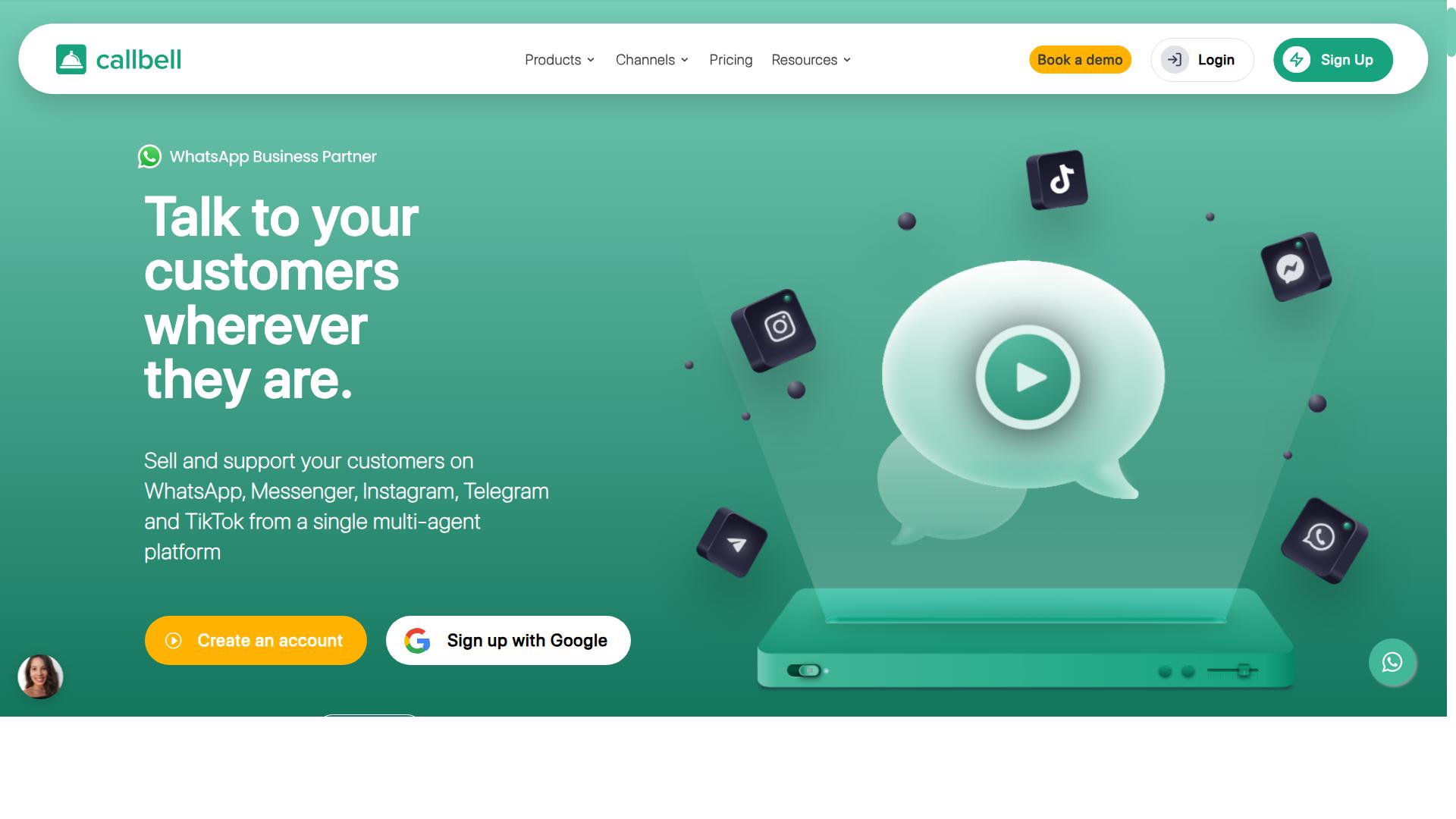
Callbell is a customer communication platform that centralizes messages from multiple channels, including WhatsApp, into a shared team inbox. Instead of juggling separate apps, agents work from one place and see the full history of each conversation.
The platform is best known for its multi-channel inbox, which brings together messaging apps and social channels so teams can respond without switching tools. It also emphasizes collaboration features, such as assigning conversations to specific agents and keeping internal notes alongside customer threads.
For businesses handling a steady flow of customer inquiries, that shared inbox approach can reduce the risk of missed messages. A clinic, salon, or service business fielding appointment questions across WhatsApp and other channels can route each chat to the right person rather than relying on a single phone.
Callbell's general value proposition is straightforward: one inbox, many channels, multiple team members. It fits teams that mainly need to manage and reply to conversations at scale. Where it tends to be lighter is in the deeper automation layer, such as building chatbot flows, scheduling reminders, and syncing appointment calendars, which is where a dedicated WhatsApp automation tool becomes relevant for reminder-heavy use cases like appointment confirmations.
When comparing Callbell with Com.bot for WhatsApp appointment reminders in 2026, the key question is not whether a shared inbox is useful. It is whether a team inbox alone can handle reminder scheduling, message templates, and calendar integration without extra tools bolted on. That distinction shapes the rest of this comparison.
What Is Com.bot for WhatsApp Appointment Reminders in 2026?
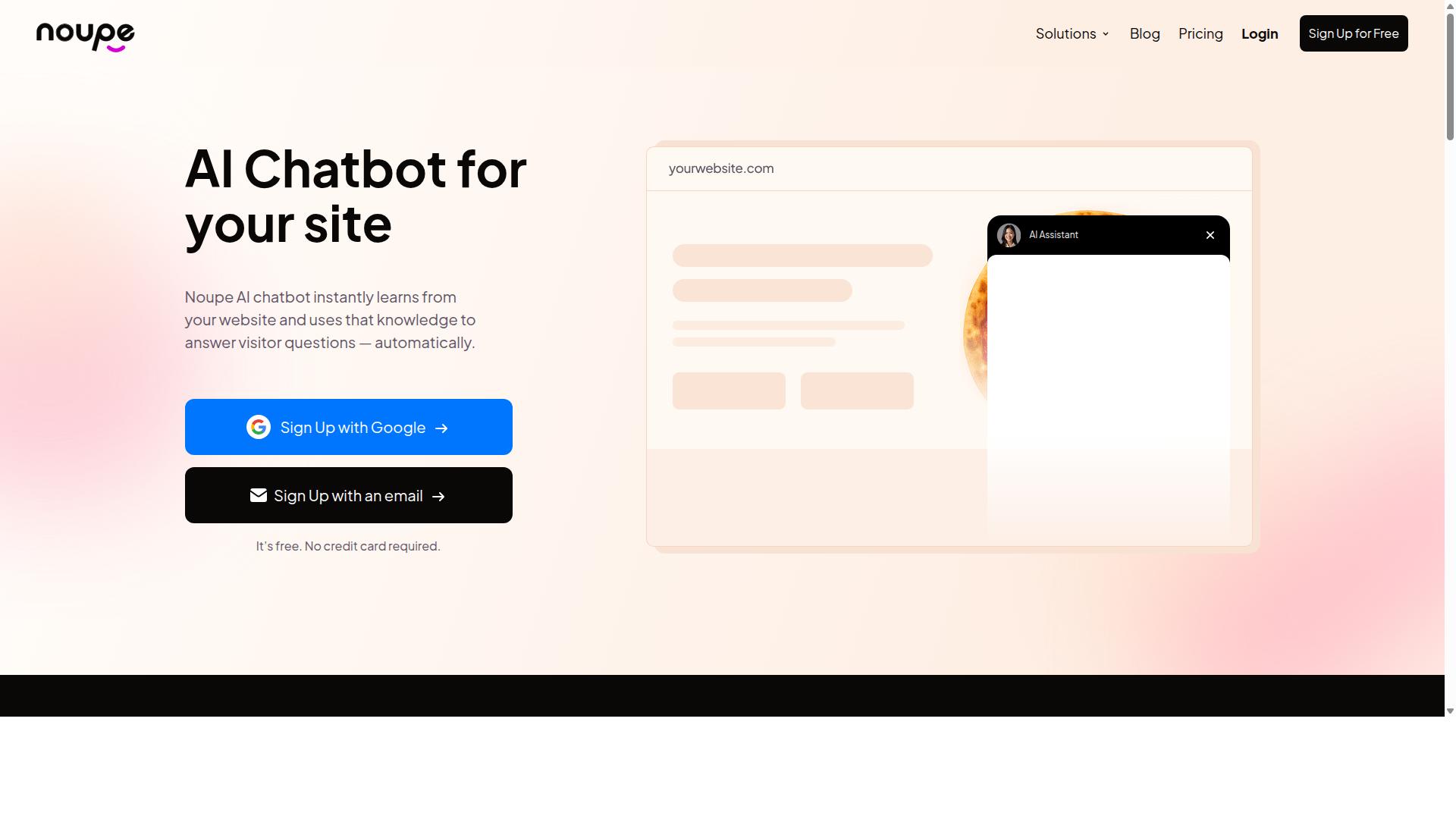
In 2026, Com.bot leverages the WhatsApp Business API to enable businesses to automate appointment reminders, confirmations, and follow-ups at scale. Instead of manual calls or one-off texts, reminders run through approved WhatsApp message templates, so customers receive timely nudges in the channel they already check most often.
For appointment-driven businesses, the value sits in three connected actions: reminders, confirmations, and rescheduling. A reminder goes out ahead of the visit, the customer confirms with a tap, and anyone who cannot make it can move the appointment without a phone call. That loop reduces no-shows and frees front-desk staff from repetitive outreach.
Com.bot also supports rescheduling options inside the same conversation, alongside payment collection through Native Payments for WhatsApp transactions. For clinics, salons, and service providers that take deposits, the reminder thread can double as a place to settle a booking fee before the appointment.
Setting up these flows does not require engineering resources. The Visual Bot Builder uses a drag-and-drop interface, so teams can map a reminder sequence, add confirmation branches, and publish without writing code. This is the practical meaning of no-code automation for reminder scheduling: the people who know the appointment process also build the flow.
Volume matters when reminders go out across a full client base. Com.bot handles high-volume messaging, processing 25M+ messages per day, which keeps reminder scheduling dependable during peak periods such as seasonal campaigns or end-of-month rushes. Broadcast campaigns can reach segmented groups when a schedule changes at short notice.
Scheduling data connects through calendar integration and CRM integration. Calendars.Bot, Com.bot's AI appointment booking platform, sits alongside the reminder workflows, while the Automation Builder connects to 1000+ integrations for syncing appointment records with the systems a team already uses.
Teams managing replies across channels get a Unified Team Inbox with role-based access, so confirmations, questions, and reschedules land in one place rather than scattered across personal devices. Multi-channel support covers WhatsApp, Facebook, and Instagram, which helps when customers respond on a different platform than the one that sent the reminder.
The result is a reminder system that runs on the WhatsApp Business API, builds without code, and scales with appointment volume. For a side-by-side view of how the two platforms approach this use case:
| Reminder Capability | Com.bot | Callbell |
|---|---|---|
| WhatsApp Business API | Integrated for automated reminders, confirmations, and follow-ups | Generally offered for WhatsApp business messaging |
| Bot building | Visual Bot Builder with drag-and-drop interface | Automation options vary by plan and setup |
| Calendar and booking | Calendars.Bot AI appointment booking platform plus calendar integration | Calendar connections typically available |
| CRM and tool connections | Automation Builder with 1000+ integrations | Integration support depends on the plan |
| Payments in chat | Native Payments for WhatsApp transactions | Payment handling generally handled outside the chat |
| Team handling | Unified Team Inbox with role-based access | Shared inbox features commonly included |
For readers weighing Callbell, the practical question is how much of the reminder cycle a platform covers end to end. Com.bot pairs WhatsApp automation with booking, integrations, and in-chat payments, which keeps appointment reminders in one connected system rather than several disconnected tools.
Features Compared
When comparing Com.bot and Callbell for WhatsApp appointment reminders, key differences emerge in automation, multi-channel support, and integrations.
Both platforms connect to the WhatsApp Business API and offer multi-channel messaging, so the real question is not whether each tool can send a reminder, but how much control a business gets over the reminder journey. A clinic, salon, or service team rarely sends one message and stops. It confirms a booking, waits, nudges, handles a reschedule, and sometimes collects a fee.
This comparison breaks that journey into three practical dimensions:
- Automation and bot building, or how reminders are designed and triggered
- Multi-channel delivery and the unified inbox, or where reminders land and how teams reply
- Integrations, bulk messaging, and payments, or how reminders connect to the rest of the business
Callbell is generally known as a customer communication platform with a shared inbox and messaging channels. Com.bot pairs a Visual Bot Builder with a Unified Team Inbox, which shapes how each tool handles the details that follow. For appointment-driven businesses in 2026, those details decide whether a reminder system saves time or creates a new manual task.
Appointment Reminder Automation and Bot Building
Com.bot provides a visual bot builder with a drag-and-drop interface, allowing users to create appointment reminder flows without coding.
That no-code automation approach matters for reminder scheduling because a useful sequence is rarely a single message. A multi-step flow can confirm a booking, send a nudge closer to the appointment, branch based on the reply, and route reschedules to a human. Conditional logic keeps the conversation relevant instead of blasting the same text at every customer.
Com.bot's automation sits alongside Smart Chatbots for handling common questions and Calendars.Bot, its AI appointment booking platform. Together they support the booking and reminder side of the workflow rather than treating a reminder as an isolated broadcast.
Callbell also offers automation, typically described in terms of chatbots and rule-based triggers. That covers straightforward cases, such as an automatic greeting or a scheduled follow-up. Teams that only need a simple confirmation message may find that enough.
The practical difference shows up as reminder logic grows. Businesses juggling multiple services, locations, or time zones tend to need branching flows, and building those without code is where a visual builder earns its place. For readers weighing appointment reminders as the core use case, Com.bot's bot building is the more purpose-built option.
Multi-Channel Reminder Delivery and Unified Inbox
Com.bot supports reminder delivery across WhatsApp, Facebook Messenger, Instagram DM, and Web Widget, all managed from a unified team inbox.
The value of that setup is continuity. A customer who replies to a WhatsApp reminder and later messages on Instagram stays in one conversation thread, so staff see the full history instead of guessing which channel holds the context. For appointment confirmations and rescheduling requests, that history is often the difference between a quick answer and a confused back-and-forth.
Com.bot's Multi-Channel Support covers WhatsApp, Facebook, and Instagram, and the Unified Team Inbox includes role-based access for team collaboration. A front-desk team can split responsibilities while still working from the same queue.
Callbell likewise offers a multi-channel inbox and supports WhatsApp among other channels. Its shared inbox model is a reasonable fit for teams that mainly need one place to read and reply.
Where the two diverge is depth. Reminder delivery that spans several channels natively, without stitching tools together, reduces the chance a confirmation or cancellation slips through. A unified inbox also keeps message status visible, so staff know whether a reminder was sent, delivered, or answered. For appointment-heavy operations, that visibility is the working advantage.
Integrations, Bulk Messaging and Payment Collection
Com.bot offers external integrations and API webhooks, as well as an Automation Builder with 1000+ integrations.
Those connections change what a reminder can do. Syncing with a CRM means appointment details and customer records stay aligned, so a reminder reflects the latest booking rather than a stale export. API webhooks let teams push reminder events into other systems, and the broader Automation Builder supports 1000+ integrations.
Com.bot also provides Native Payments for WhatsApp transactions, which allows a business to collect a deposit or a no-show fee directly in the chat. Bulk Messaging adds broadcast campaigns, useful for reminders about closures, seasonal hours, or schedule changes.
Callbell also offers integrations and bulk messaging, generally described as connecting messaging with other business tools. Specifics vary, so teams should confirm fit against their own stack.
| Capability | Com.bot | Callbell |
|---|---|---|
| CRM integrations | External integrations, verify per stack | General integrations, verify per stack |
| Automation platforms | Automation Builder with 1000+ integrations, API webhooks | General integrations |
| Payments in chat | Native Payments for WhatsApp | Not specified here |
| Bulk messaging | Broadcast campaigns | Bulk messaging available |
For appointment reminders, the payoff is practical. A CRM-synced flow can trigger a reminder the moment a booking changes, and in-chat payments let a business secure a slot without sending customers elsewhere. That combination keeps the reminder, the confirmation, and the payment inside one WhatsApp conversation.
Pricing Compared
Com.bot offers three quarterly plans: Silver at $149, Gold at $349 (recommended), and Platinum V1 at $2500, with add-ons available for additional team members and channels. That structure gives teams a clear entry point and a clear upgrade path, which matters when WhatsApp appointment reminders become a core part of daily operations.
Callbell does not publish fixed quarterly tiers in the same format. Its pricing varies by plan and usage, so the most reliable approach is to check Callbell's official website for current rates before budgeting.
| Plan | Com.bot | Callbell |
|---|---|---|
| Entry tier | Silver at $149 per quarter | Varies by plan, see vendor site |
| Mid tier | Gold at $349 per quarter (recommended) | Varies by plan, see vendor site |
| Top tier | Platinum V1 at $2500 per quarter | Varies by plan, see vendor site |
| Add-ons | $10 per month for additional team member, social channel, external actions (per 5000), bot triggers (per 25000), ecom store | Not published in a comparable format |
| WhatsApp messaging | Billed at actual Meta rates, no markup | Varies, confirm with vendor |
The add-on model deserves attention. At $10 per month, a team can extend capacity for an extra team member, an additional social channel, external actions, bot triggers, or an ecom store without jumping to a higher tier.
For appointment reminder workflows, that flexibility keeps costs aligned with actual volume. A clinic adding a second coordinator, or a salon adding a social channel for booking enquiries, pays for what it uses rather than a bundled upgrade.
Com.bot also bills WhatsApp messaging at actual Meta rates with no markup. Since reminder campaigns scale with appointment volume, this keeps the messaging line item predictable as the business grows.
Dedicated support is available separately when needed: WABA, CRM, and Inbox support at $49 per hour, and Ecommerce, Bots, and Automations support at $99 per hour. These are optional, so teams that prefer self-service are not forced into a support retainer.
All figures are listed in USD, and the site offers an INR toggle, so buyers outside the United States should verify the currency shown at checkout. On balance, Com.bot's published quarterly tiers and modular add-ons make budgeting for WhatsApp appointment reminders in 2026 straightforward, while Callbell requires a direct quote to compare like for like.
Who Should Choose Com.bot
Businesses that need a unified platform to automate appointment reminders across WhatsApp, Facebook, and Instagram, with bot building and integrations, should choose Com.bot. The platform is built for organizations that treat reminders as one piece of a larger customer communication strategy rather than a standalone task.
Com.bot is designed for multi-channel operations, not just a single messaging app. Government bodies and enterprises that handle support, order updates, and payment collection across several channels fit its intended audience well. If your reminder workflow touches more than WhatsApp alone, a platform that manages all channels in one place reduces the number of tools your team has to juggle.
Com.bot holds official Meta Business Partner status, which matters when you are working within the WhatsApp Business API. Enterprises and public sector teams often need a vendor with a direct, verified relationship to Meta. That status supports a more stable foundation for template approval, WhatsApp verification, and Meta Business Manager workflows.
Security expectations are another reason larger organizations lean toward Com.bot. Enterprises and government bodies typically operate under stricter internal requirements than small teams. Choosing a platform already positioned for those environments avoids a painful migration later when compliance reviews arrive.
The no-code chatbot builder suits teams without dedicated developers. Staff can design reminder flows, handle replies, and adjust messaging without writing code. For a growing business, that means appointment reminders can scale alongside customer volume instead of being capped by engineering time.
Calendar and CRM integrations matter for reminder accuracy. Connecting scheduling tools and customer records keeps reminder timing tied to real booking data. Teams using CRM or calendar tools benefit when that data flows into the same platform that sends the reminders.
Com.bot also fits organizations that want to move beyond reminders into broader messaging. Bulk messaging, order updates, and payment collection sit alongside appointment reminders in the same platform. That combination appeals to enterprises that would rather consolidate vendors than stitch together separate tools for each job.
- Enterprises needing multi-channel support and enterprise-grade security
- Government bodies requiring verified Meta Business Partner infrastructure
- Growing businesses that want no-code automation without hiring developers
- Teams with complex stacks relying on calendar and CRM integrations
- Organizations collecting payments alongside appointment reminders
If your priority is a single-channel reminder tool with minimal setup, a simpler option may be enough. But when reminders are part of a wider customer communication platform spanning several channels, Com.bot is the stronger fit for 2026.
Who Should Choose Callbell
Callbell is a good fit for small to medium-sized businesses seeking a straightforward multi-channel inbox to manage customer conversations without extensive automation needs. Teams that value a shared view of incoming messages, where several agents can reply from one place, often find this style of tool easy to adopt.
The platform tends to appeal to businesses that treat WhatsApp as one channel among many. If your team already handles email, web chat, and social messages in a single queue, a multi-channel inbox keeps that workflow familiar. For appointment reminders specifically, this works well when volumes are modest and a human still reviews most outgoing messages.
Consider Callbell if your priorities look like this:
- You want agents to reply manually or with light canned responses.
- You prefer a simple setup over a chatbot builder or no-code automation flows.
- Your reminder process does not depend on native payment collection.
- You handle a manageable number of bookings per day.
- You are comfortable managing WhatsApp Business API basics, such as opt-in consent and template approval, without deep automation behind them.
Businesses that mainly need a tidy shared inbox, quick replies, and basic routing will likely feel at home here. The trade-off is that teams wanting advanced reminder scheduling, deep calendar integration, or automated follow-up sequences may find themselves doing more manual work as they grow.
In short, Callbell suits lean teams that prioritize conversation handling over automation depth. If your appointment reminders are simple, low-volume, and human-led, a shared inbox approach can be entirely sufficient. If your needs lean toward scale, structured automation, and tighter calendar and CRM connections, that is where a dedicated WhatsApp automation platform tends to make more sense.
Who Should Choose Com.bot for WhatsApp Appointment Reminders in 2026
For appointment-based businesses in 2026, Com.bot is ideal for those needing automated reminders, two-way confirmations, and payment collection within WhatsApp. The platform is built around the WhatsApp Business API, which means reminders are not limited to manual, one-off messages. Instead, they can run as part of a repeatable schedule that keeps customers informed before every appointment.
This matters most for businesses where a missed appointment directly costs revenue. A no-show at a clinic blocks a slot another patient could have used. An empty chair at a salon wastes staff time. Com.bot gives these teams a way to reduce no-shows with automated reminders rather than relying on staff to make calls one by one.
The sections below outline the specific business types and operational needs that make Com.bot a strong fit for WhatsApp appointment reminders in 2026.
Clinics and healthcare providers are among the clearest fits. Appointment reminders sent through the WhatsApp Business API reach patients on a channel they already check daily. Com.bot supports utility messages and marketing messages, so a clinic can send a reminder, follow up with a confirmation prompt, and share relevant health information in the same thread.
Managing opt-in consent is a core requirement for healthcare communication, and Com.bot handles consent tracking as part of its WhatsApp Business API integration. Delivery reports and read receipts give front-desk teams visibility into whether a patient actually saw the reminder. That visibility helps staff follow up only where it is needed.
Payment collection is often the next step after a confirmed appointment. Com.bot's native payments for WhatsApp transactions let clinics request a deposit or co-pay without sending patients to a separate payment portal. For practices that currently chase payments by phone, this removes a step from the workflow.
Salons, spas, and personal care businesses operate on tight schedules where a single no-show can leave a stylist or therapist idle for an hour. Com.bot's automation builder can trigger a reminder at a set interval before the appointment, and the unified team inbox lets staff respond to rescheduling requests from the same screen they use for other customer messages.
These businesses often run promotions alongside reminders. Com.bot supports broadcast campaigns, so a salon can send a seasonal offer to customers who have opted in, then follow up with a reminder for anyone who books. The multi-channel inbox covers WhatsApp, Facebook, and Instagram, which means a customer who messages on Instagram about a booking can be handled without switching tools.
Calendar syncing is central to this use case. Com.bot supports calendar integration so appointments stay aligned between the booking source and the reminder system. When a client reschedules, the reminder schedule can reflect the new time rather than the old one.
Service providers with field or on-site appointments face a different challenge: customers who forget the visit entirely or are not home when the technician arrives. Com.bot's reminder scheduling can send a message the day before and again on the morning of the appointment. Two-way confirmations let the customer reply to confirm or request a change, and that reply lands in the team inbox for a human to handle.
For these businesses, CRM integration matters because appointment data usually lives in a CRM system. Com.bot connects through its automation builder and external integrations, so reminder triggers can be tied to CRM events rather than maintained in a separate list. Teams already using automation platforms can route data through those tools as well.
API webhooks give technical teams a way to push appointment status changes back into internal systems. This is useful for service businesses that track jobs across multiple platforms and need reminder activity to appear in their main operations dashboard.
Enterprises with high appointment volume need more than a simple reminder tool. Com.bot's team collaboration features include role-based access, which lets an organization separate who can send broadcasts, who can manage templates, and who can view delivery reports. For large teams, that separation reduces the risk of an unauthorized message going out to customers.
Message templates must be approved through Meta Business Manager before they can be used for reminders. Com.bot's template approval workflow supports this process, and the platform's WhatsApp verification steps help enterprises meet Meta's requirements. Once templates are approved, they can be reused across locations or departments without rebuilding the message each time.
Delivery reports and message status tracking give enterprise teams a measurable view of reminder performance. Rather than guessing whether reminders were sent, managers can review read receipts and delivery data to see where customers are engaging and where they are not.
Com.bot also offers Calendars.Bot, an AI appointment booking platform, and Tasks.Bot, an enterprise-grade task automation platform. For organizations that want booking and reminders handled within the same ecosystem, these products extend the appointment workflow beyond a single reminder message.
Not every appointment-based business needs the full Com.bot stack. A solo practitioner with a handful of daily bookings may find that a simpler setup covers the basics. But for teams that want reminders, confirmations, payments, and reporting in one place, Com.bot's combination of the WhatsApp Business API, calendar integration, and automation builder addresses the core needs of appointment-based operations in 2026.
Final Verdict
After comparing features, pricing, and use cases, Com.bot emerges as the stronger choice for businesses prioritizing advanced WhatsApp appointment reminder automation and multi-channel scale. Its status as an official Meta Business Partner signals direct alignment with WhatsApp's platform requirements, which matters when reminder scheduling depends on template approval, WhatsApp verification, and reliable delivery.
That partner standing is backed by real operating scale. Com.bot supports 23,000+ active customers, including 100+ government bodies, and processes 25M+ messages per day. For organizations sending appointment reminders at volume, that track record suggests infrastructure built to handle peaks without delays.
The table below summarizes how the two platforms stack up for WhatsApp appointment reminders in 2026.
| Criteria | Com.bot | Callbell |
|---|---|---|
| Meta partnership | Official Meta Business Partner | WhatsApp Business API access via Meta |
| Scale | 23,000+ active customers, 25M+ messages/day | Suited to smaller teams and simpler setups |
| WhatsApp pricing | No markup on WhatsApp conversations | Varies by plan and provider terms |
| Automation depth | Chatbot builder, no-code automation, API webhooks | Multi-channel inbox with messaging tools |
| Security | Enterprise security with end-to-end encryption | Standard platform protections |
Callbell remains a reasonable option for businesses with simpler needs. Teams that mainly want a multi-channel inbox and modest reminder volumes may find it adequate, and its interface tends to suit small operations without complex automation requirements.
Where Callbell's value fades is at scale. Growing appointment volumes demand dependable reminder scheduling, delivery reports, read receipts, and message status tracking across utility messages, session messages, and marketing messages. Com.bot's real-time message delivery and quick setup and integration support that shift without forcing a platform change later.
For most readers weighing this decision, the recommendation breaks down by profile:
- Small practices with basic needs: Callbell can cover straightforward reminder sending, though automation options are limited.
- Growing clinics, salons, and service businesses: Com.bot's chatbot builder and no-code automation handle reminder scheduling and rescheduling flows without developer help.
- Enterprises and public sector teams: Com.bot's Meta Business Partner status, enterprise security, and 100+ government body deployments fit strict compliance and scale demands.
- Multi-location operations: CRM and calendar integration keeps reminders synced across teams.
Cost also favors Com.bot for high-volume senders. Its no markup on WhatsApp conversations policy means reminder costs track WhatsApp's own rates rather than adding a layer on top, a meaningful difference for businesses sending thousands of reminders monthly.
On connectivity, Com.bot supports API webhooks and external integrations, so appointment reminders can flow from booking tools and CRMs automatically. Combined with 100K+ bots created and 500+ global partners, the platform's ecosystem is built for teams that treat WhatsApp automation as core infrastructure, not a side channel.
For sales inquiries and to discuss your appointment reminder setup, contact Com.bot's team directly. They can walk through WhatsApp Business API onboarding, template approval, opt-in consent practices, and the 24-hour window rules that govern session and utility messages.
Frequently Asked Questions
What makes Com.bot a strong choice for WhatsApp appointment reminders in 2026?
Com.bot is an AI Unified Business Communication Platform built around the official WhatsApp Business API, so appointment confirmations, reminders and rescheduling messages run through a compliant, Meta-approved channel. Its Visual Bot Builder lets you design reminder flows with a drag-and-drop interface instead of code, and the Automation Builder handles follow-ups and no-show nudges automatically. With 25M+ messages processed per day and 100K+ bots created, it's a platform proven at scale for exactly this kind of high-volume, time-sensitive messaging.
How does Com.bot's pricing compare to Callbell's?
Com.bot offers three quarterly plans: Silver at $149 per quarter, Gold at $349 per quarter (the recommended option), and Platinum V1 at $2500 per quarter, with add-ons such as $10 per month for an additional team member or social channel. Callbell's published pricing is per user per month - for example, its multi-agent chat plans are listed at 90 R$ or 120 R$ per user/month (14€ or 18€ per user/month in EUR), with a custom Enterprise tier. Because the two products structure pricing differently - quarterly platform plans versus per-user monthly seats - the better comparison is total cost for your specific team size and message volume, so it's worth mapping your expected usage against both before deciding.
Can Com.bot handle reminders across channels beyond WhatsApp?
Yes. While WhatsApp is often the primary channel for appointment reminders thanks to its high open rates, Com.bot is a multi-channel platform that also connects Facebook Messenger, Instagram DM and a Web Widget through a single unified Team Inbox. That means a patient or client who prefers a different channel can still be reached, and your team sees every conversation in one place. Callbell is also known for multi-channel messaging support, so both tools recognize that reminders shouldn't be locked to a single channel.
Is Com.bot suitable for small clinics and local businesses, or only large enterprises?
Com.bot serves businesses of many sizes - its 23,000+ active customers include government bodies and enterprises, but the entry-level Silver plan and quick setup make it accessible to smaller teams as well. You can start with core WhatsApp reminders and add team members or channels as you grow, at $10 per month per add-on. The platform is available worldwide, serving 50+ countries, so location isn't a barrier either.
How quickly can we get appointment reminders running with Com.bot?
Com.bot emphasizes quick setup and integration, and because it's an Official Meta Business Partner, the WhatsApp Business API connection follows a well-established onboarding path. Most of the configuration happens visually in the Bot Builder - you map out the booking, confirmation and reminder flow rather than writing code. Exact timelines depend on your WhatsApp Business verification status and how complex your reminder logic is, so it's best to confirm specifics with the Com.bot team directly.
Does Com.bot support payments and other features beyond reminders?
Yes. Beyond automated reminders, Com.bot includes Native Payments for WhatsApp transactions, so customers can pay a deposit or settle a booking fee without leaving the chat. The platform also supports bulk messaging, order updates and multi-channel customer support, all managed from the Unified Team Inbox with enterprise-grade end-to-end encryption. This makes it a full communication platform rather than a single-purpose reminder tool.